Showing posts with label wallace. Show all posts

Tuesday, 28 July 2015

The Royal Society is Nought but a Darwin and Wallace Glee Club

Sir Gavin de Beer (FRS) wrote in the Wilkins Lecture for the Royal Society (de Beer 1962 on page 333):

"...William Charles Wells and Patrick Matthew were predecessors who had actually published the principle of natural selection in obscure places where their works remained completely unnoticed until Darwin and Wallace reawakened interest in the subject.'

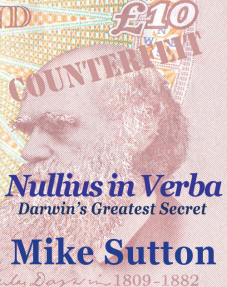
What the expert Royal Society member Sir Gavin Rylands de Beer, British evolutionary embryologist, Director of the British Museum (Natural History), President of the Linnean Society, and receiver of the Royal Society's Darwin Medal for his studies on evolution never knew - that I have uniquely discovered (see Nullius in Verba) - is that  at least 25 people actually cited Matthew's (1831) book before Darwin's and Wallace's papers, which replicated Matthew's original ideas and explanatory examples, were read before the Linnean Society in 1858, seven of them were naturalists, four known to Darwin and two to Wallace.
Royal Society Darwin Medal

So where's my Darwin Medal for being proven a better scholar than de Beer on his own subject?

Perhaps the Royal Society needs to improve the quality of its membership and medal winners? Linnean society too. The pseudo-scholarly Darwin glee-club shame of it! 

Visit PatrickMatthew.com to learn the truth about the discovery of natural selection.

Monday, 27 July 2015

The New Crisis in Darwinism


Progress in search engine technology facilitated original research in Google's Library Project of over 30 million searchable books and other publications.That research led to game changing discoveries, which have transformed the unique anomaly of Darwin's and Wallace's claimed dual independent discoveries of Matthew's prior-published original ideas. That old anomaly was changed by the New Data in 2014 from a vexation into a crisis of credulous deifying Darwinist belief in the double occurrence of paradoxical immaculate conceptions by Darwin and Wallace, miraculously occurring as each logically must, whilst they were surrounded by naturalists who they knew, who influenced them, and whose minds were fertile with Matthew's ideas, having read and then cited the book decades before Wallace (1855) Darwin and Wallace (1858) and Darwin (1842, 1844 and 1859) replicated the work within it, and decades before Darwin fallaciously claimed no naturalist had read it before 1860.

Consequently, the issue of Patrick Mathew's priority over Darwin and Wallace for his own prior-published and cited discovery is not something that the history of scientific discovery can ethically or sensibly continue to choose to ignore if it is to be of any use in helping us to understand how the discovery of natural selection occurred. Such knowledge is important, because it is fundamental in developing ways to increase the chances of making other great discoveries in the future.

Read more on the Patrick Matthew Website Here

Sunday, 24 May 2015

Darwin's and Wallace's Immaculate Deception: On the Portrait by Gabriel Woods

In the words of the artist Gabriel Woods (May 2015) in his explanation for his portrait "Immaculate Deception":
"The picture represents Charles Robert Darwin and Alfred Russel Wallace who both claimed, they each independently discovered the theory of natural selection with no prior knowledge of Patrick Matthew's earlier work. Patrick Matthew is represented in the allegorical painting as the infant "
To find out more about the story behind the picture 'Immaculate Deception' please click here.

Sunday, 19 April 2015

The Google Monster Sniffed-out the Darwin --> Robert Mudie Connection to Patrick Matthew

The Google Monster

image
Dysology.orgAttribution
The Google (1913)
My original work in discovering the links between David Low and Robert Mudie to Patrick Matthew's (1831) Original prior-published discovery of the 'natural process of selection' and Darwin's replication of it would not have been possible without Google Chrome and the ID research method, which enabled me to search through over 30 million books and journals.
So effective is the ID research method that it enabled me to get back further with the Google search engine than Google's own staff - where I used the Google Monster to sniff out its namesake.
In fact, I used Google to discover the original Google! You can read that amusing story about the power of ID here.

Into the forests of the 19th century with Google to find evidence of Darwin's plagiarism

In the year I was born, Loren Eiseley caused a stir in 1959 when he accused Charles Darwin of plagiarizing the work of Edward Blyth (see Smith 1979    for an interesting but somewhat disingenuous overview of Eisleley's collected works of 1979, where Smith, in the general and unfortuantely biased fashion of so many typical desperate dysological Darwinists gives the dismissive false impression - deliberate or just remiss - that it is he who has discovered that Blyth took much from Mudie's 1835 "Feathered Tribes" book, when in fact Eiseley (1979, e.g, page 61) labored the point and it is from him that Smith gets it - so long as you bother to read Eiseley carefully.. The difference between Blyth and Smith is that Blyth was careful to cite his sources. The difference between Blyth and Darwin is just the same! The difference between Eiseley and Smith is that Eiseley was careful to cite his sources. The difference between Eiseley and Darwin the same.
Eiseley's collected papers on the topic of Darwin's plagiarism of Blyth can be found in the Book that contains those collected papers on Darwin. namely, Darwin and the Mysterious Mr X   , which was published in 1979, two years after Eiseley's death.
image
Edward Blyth is acknowledge to have Influenced Darwin. His most influential papers were edited by Loudon, who had earlier - in 1832 - reviewed Matthew's (1831) book and said it might have something original to say on "the origin of species"! Darwin's associate William Hooker (father of Darwin's best friend) knew Loudon and his friends very well!
Loren Eiseley (1979) ably demonstrated (pp 61-62) that Darwin cumulatively borrowed from Blyth's (1835) book 'The feathered tribes of the British islands' and his other published papers, without citing them.
Much of Darwin's prose, it was ably demonstrated by Eiseley, came from Blyth's papers of 1835 and 1837. But it is true also that nothing much of the full hypothesis of natural selection comes from them (see Smith 1979   ); although they are important papers on variety and habitat etc. But when it comes to his 1837 paper on to topic of "variation" and the "localizing principle" -    (published by Longman and co - Matthew's London publisher - no less) - Eiseley (1979, p. 91) explains that Blyth comes close to the theory on natural selection. On this point, Eiseley- points out the work of De Beer which shows how much Blyth influenced Darwin's writing in his private Zoonomianotebook of 1837-38. What De Beer and Eiseley failed to note is that Blyth's "localizing principle" is heavily dependent upon Matthew's bombshell observations six years earlier of "power of occupancy".
In particular, we must remember that the religious Blyth did not believe in the evolution of species and pulled back form where his prose was leading-back to Matthew's conclusions that species could vary so much that they became new species. See Eiseley (1979 p.58 for an explanation of this fact). And that is a key point about the limitations of stopping at Blyth, as Eiselely did, and of not going back from him to Matthew - who originated and wrote out the entire theory of natural selection and was cited many times and reviewed by Blyth's editor - John Loudon and with whom we can establish collegiate links with Blyth's friend Mudie and others (as explained in great detail in Nullius   ) and particularly Mudie's acknowledged influence on Blyth and the prose and ideas that Darwin copied from Blyth, without any attribution, that Blyth did attribute to Mudie.
Some 55 years later, now that the dust has settled on Eiseley's (1959) work, and his many papers that followed, it is essentially agreed that Darwin did steal much prose from Blyth and no doubt was influenced by the information he provided. However, unlike Matthew - the Originator of Natural slection and the great analogy that explained it, Blyth was well acknowledged by Darwin from the third edition of the Origin of Species onward as an important and highly valued general influence on his work.
Blyth might not have published the hypothesis of natural selection before Darwin, but Patrick Matthew certainly did before them both.
Prior to the reading of Wallace's and Darwin's papers before the Linnean society in 1858, it is widely agreed by the top scholars in the field that Patrick Matthew in 1831 penned the entire hypothesis of natural selection.! See my Rational Wiki essay    for the details and references.
Of great importance, is the fact that it has gone unremarked until I wrote in 2014 these very same words you reading   , that the editor and publisher of Blyth's (1835, 1836) most important papers on organic evolution was John Loudon, who in 1832, reviewed NTA and remarked that Matthew had discovered something unique on the origin of species!
Since Darwin admitted Blyth's influence on his thinking, this discovery of almost certainknowledge contamination, is alone enough to completely demolish the 154-year-old Darwinian myth that Matthew had no influence on Darwin.
Eiseley thought also that in addition to stealing from Blyth that Darwin had read and plagiarized Patrick Matthew's discovery of natural selection. But apart from what Jim DempsterMilton Wainwright    and Hugh Dower    and myself (Nullius in Verba 2014   ), have written on that topic, Eiseley's discovery in this area has been most conveniently ignored by Darwinists.
Eiseley noted that following Matthew’s letter in the Gardener’s Chronicle of 1860 – claiming his priority – that Darwin (1868) replicated his 1844 private essay replication of Matthew’s unique prior-published analogy – this time citing Matthew.
In my earlier blog on Matthew's Artificial versus Natural Selection Analogy I included the text that Eiseley discovered. I now include it again.
'Man's interference, by preventing this natural process of selection among plants, independent of the wider range of circumstances to which he introduces them, has increased the differences in varieties particularly in the more domesticated kinds...' "In his unpublished essay of 1844,
Darwin wrote, 'In the case of forest trees raised in nurseries, which vary more than the same trees do in their aboriginal forests, the cause would seem to lie in their not having to struggle against other trees and weeds, which in their natural state doubtless would limit the conditions of their existence…"
In that later text, to which Eiseley directs us, Darwin (1868) wrote:
"Our common forest trees are very variable, as may be seen in every extensive nursery-ground; but as they are not valued as fruit trees, and as they seed late in life, no selection has been applied to them; consequently, as Patrick Matthew remarks, they have not yielded different races…"
Eiseley knew nothing of David Low's 1844 replication of so much of Matthew's work (seeNullius). Therefore, he wrote that Darwin must have got this example from Matthew by 1844. However, I discovered with ID that Professor David Low replicated Matthew's original analogy in 1844 as well as being the first to second publish unique Matthewisms. Darwin read Low and recommended him to Royal Society. Low was Matthew's Perth Academy schoolmate and shared the exact same Edinburgh and London Publishers as Matthew (see my Position Paper Sutton 2014). How's that for a bunch of mere coincidences?
David Low (1844) wrote enough that was similar to Matthew's text for it to be said, I think, that Darwin could in fact have got the idea - as a form of indirect 'knowledge contamination' from him:
‘The Wild Pine attains its greatest perfection of growth and form in the colder countries, and on the older rock formations. It is in its native regions of granite, gneiss and the allied deposits, that it grows in extended forests over hundreds of leagues, overpowering the less robust species. When transplanted to the lower plains and subjected to culture, it loses so much of the aspect and characters of the noble original, as scarcely to appear the same. No change can be greater to the habits of a plant than the transportation of this child of the mountain to the shelter and cultivated soil of the nursery; and when the seeds of these cultivated trees are collected and sown again, the progeny diverges more and more from the parent type.'
However, another got there before Low. His name was Robert Mudie and he was born in Matthew's county of Forfarshire in Scotland and he published on this topic only a year after Matthew. I came accross Mudie by searching with the ID method (as explained in Nullius, in the section that is free to read on Amazon   ) for specific words terms and phrases that, out of 30+ million books and journals online, Matthew 1831 appears to have coined. Mudie in 1832 was first to be second to use the extremely rare and apparently unique phrase "rectangular branching". This strongly suggests it is more likley than not that Mudie read Matthew's book as soon as it came out.
Only later did I find, from reading Eiseley (1979), that Mudie was a friend and associate of Darwin's great influence, Blyth. See page 171 of Eiseley 1979 - which explains that Blyth and Muddie worked together on an illustrated translation of Cuvier in 1840 - and that Blyth had read and cited much of Mudie's work. Some of the prose within Mudie's considerable output was bout the camouflage of birds, Blyth used and cited it. That same prose, Eiselely discovered, was replicated without citation by Darwin.
If the internet was available in Eiseley's day there is little doubt that he would have made the same connection that I did, Namely that Mudie - who so influenced Blyth and Darwin - had surely read Matthew by 1832.
The case for Matthewian knowledge contamination of Darwin's brain by Mudie, who read Matthew (1831) and wrote about evolution without citing Matthew, is extremely powerful and it is far more significant than the simple fact discovered by Eiseley and celebrated by his peers, that the prose of Blyth (taken from his associate Mudie) - was replicated by Darwin without citation to its source.
Mudie (1832)     Page 368 wrote:
‘If we are to observe nature, therefore, we must go to the wilds, because, in all cultivated productions, there are secondary characters produced by the artificial treatment, and we have no means of observing a distinction between these, and those which the same individual would have displayed, had it been left to a completely natural state. The longer that the race has been under the domestication and culture, the changes are of course the greater. So much is that the case that in very many both of the plants and animals that have been in a state of domestication since the earliest times of which we have any record, we know nothing with certainty about the parent races in their wild state. As to the species, or if you will the genus we can be certain. The domestic horse has not been cultivated out of an animal with cloven hoofs and horns; and the domestic sheep has never been bred out of any of the ox tribe. So also wheat and barley have not been cultivated out of any species of pulse, neither have Windsor beans at any time been grasses. But within some such limits as these our certain information lies; and for aught we know the parent race may, in its wild state, be before our eyes every day and yet we may not have the means of knowing that it is so. The breeding artificially has been going on for at least three thousand years…’
Mudie (1832)     Page 369-370
‘But there is another difficulty. When great changes are made on the surface of a country, as when forests are changed into open land, and marshes into corn fields, or any other change that is considerable, the changes of the climate must correspond; and as the wild productions are very much affected by that, they must also undergo changes; and these changes may in time amount to the entire extinction of some of the old tribes, both of plants and of animals, the modification of others to the full extent that the hereditary specific characters admit, and the introduction of not varieties only but of species altogether new.
That not only may but must have been the case. The productions of soils and climates are as varied as these are; and when a change takes place in either of these, if the living productions cannot alter their habits so as to accommodate themselves to the change there is no alternative, but they must perish.’
Mudie (1832)     seemed to be recommending that humans engage in trying to approximate a kind of natural process of selection (370-371):
“Cultivation itself will deteriorate, and in time destroy races, if the same race and the same mode of culture be pursued amid general change. Our own times are times of very rapid change, and, upon the whole, of improvement; we dare not, without the certainty of their falling off, continue the same stock and the same seed corn, season after season, and age after age, as was done by our forefathers. The general change of the country, must have change and not mere succession, in that which we cultivate; and thus we must cross the breeds of our animals, and remove the seeds and plants of our vegetables from district to district. There is something of the same kind in human beings..”

The Matthew --> Mudie --> Low --> Blyth --> Darwin Connection

Much of the text that follows is taken from my previous blog on the F2b2 Hypothesis:
The Case of Robert Mudie and Matthewian 'Knowledge Contamination' of Darwin's so called 'independent discovery of natural selection.
  • In his Book The Botanic Animal Robert Mudie (1832) was apparently the first to replicate the Matthewism "rectangular branching" - a phrase not used in print again (apparently) until 1871.
  • The Scot, Mudie, like Matthew, was born in Forefarshire Scotland
  • Mudie, a prolific author    , worked worked energetically for burgh reform with R. S. Rintoul    , editor of the radical Dundee Advertiser - a newspaper that was very kind to Patrick Matthew - giving him a voice when others would not.
  • Mudie was a friend and twice co-author with Blyth - the naturalist who most assisted and influenced Darwin pre-Orign. And Blyth's two early papers on species variety - that so influenced Darwin - were edited by John Loudon who reviewed Matthew's 1831 book in 1832 and remarked that it may have had something original to say on "The Origin of Species".
  • Mudie died in 1842 - leaving his second wife (daughter of a captain in the East India Company) penniless. One report     describes him as an intemperate spendthrift worn out too early by excessive intellectual endeavor and poverty.
  • The highly respected anthropologist and science historian Loren Eiseley (1979, p. 214) spotted in a different 1832 publication of Mudie's that this particular Scot had somehow grasped, something, quite significant:
'Long ago when Darwin was still a youth aboard the Beagle, the Naturalist Robert Mudie, faithful to his century, had written:
' "There is a law that maintains the species." Scarcely had he made this assertion before he was busy explaining that all cultivated plants or animals were more or less monsters and that of the appearance of their parentage we know little or nothing. Even of wild forms he ends by hinting ambiguously of the emergence of species "altogether new". Finally he verges on complete heresy. "There is something," he almost whispers, "of the same kind in human beings," '
In his own earlier book of 1832, Mudie writes a great deal of text that focuses upon Matthew's topic of forest trees and the effects upon wood of the natural and cultivated circumstances in which grows.

Conclusion

Did Mudie read his Forefarshire neighbor's - Patrick Matthew's - book, published the year before one of his own replicated a unique Matthewism and another of his books touched upon the same heresy?
Did he influence Blyth with some type of Mathewian knowledge contamination so that Blyth's work - that so significantly influenced Darwin - infected Darwin's brain?
Did Darwin get his knowledge about the difference between trees under artificial selection and those under natural selection directly from Matthew, and/or indirectly from either (or both) Mudie and Low?
image
Nullius in Verba
Was Blyth, Darwin's great influencer, more likely than not double-dosed with Matthewian knowledge via his editor Loudon, who reviewed Matthew's book, as well as by Mudie? I would say so.
Darwin always maintained that neither he nor any naturalist known to him had read Matthew's 1831 book, which contained the full prior-published hypothesis of natural selection and the most powerful analogy in the world to explain it. Darwin was 100 per cent wrong! He did know seven naturalists who read it - because they cited it in the literature pe-1858! And three of those naturlaists (Loudon, Selby and Chambers) played major roles at his and Wallace's epicenter of ipre-1858 influence on natural selection.
If such a macabre thing were possible, I expect Loren Eiseley would be singing in his grave.

To find out more:

Read my book Nullius in Verba for more highly detailed information about Darwin's and Wallace's great science fraud.

Friday, 17 April 2015

Why Darwinists Missed the World's Most Powerful Analogy

Building a little upon the extensive work of the pioneering human transplant surgeon and Darwin expert Jim Dempster, I summarized in my book “Nullius ” what Patrick Matthew originally contributed to knowledge in 1831. I wrote:
‘Matthew originated the concept of Natural Selection in 1831 to explain the emergence and extinction of species between and after geological catastrophic events. He uniquely named it “the natural process of selection”, which he described as a fundamental law of nature. He discussed divergence in terms of diverging ramifications, the mutability of species, rejected miraculous birth of new species following catastrophes, held to a steady state in nature interrupted by catastrophes, understood the importance of the complex multi-level phenomenon of power of occupancy and ecological niches, rejected simple development from nearly-allied species in favour of descent from common ancestor, recognized what constituted a species, recognized the difference between domestic and wild species and saw artificial selection as the key to both discovering and explaining the process of natural selection.’
The last 16 words of the last sentence are rather important.
Dr Mike Weale, senior academic and statistical geneticist at Kings College London    and I have spent some considerable time debating amicably whether or not (and if so – to what degree) Matthew’s various comparisons of artificial selection (in terms of humans cognitively breeding by way of selective breeding – animals and plants under protective culture to suit their own needs) with natural selection (the ‘natural process of selection’ in the wild where the most circumstance suited varieties are selected by nature to survive in the wild) is an analogy. The debate was settled on 14th April 2015 on the Patrick Matthew Project.   
Essentially, it was agreed that there are actually two main artificial and natural selection analogies that were used in the 19th century by those writing at the cutting edge about their own work that they believe led to the discovery of natural selection.
This is a new understanding in the story of the discovery of natural selection.
In current absence of any disconfirming evidence, the literature record shows that although many others before Matthew (1831) mentioned what artificial selection does, only Matthew used that information in an analogy with anything like any kind of understanding of any of the processes of natural selection to show the differences between the two. Matthew did this as an explanatory device to help readers understand what natural selection was. This was an analogy of differences. Analogies that focus upon difference, as opposed to analogies of sameness or similarities between the things compared come under the broad definition of the term analogy that is provided by the Oxford English Dictionary: ‘A comparison made between one thing and another for the purpose of explanation or clarification.’ We might name Matthew’s unique analogy of Artificial versus Natural Selection: ‘The Analogy of Differences’.
The same unique analogy of differences that Matthew used in 1831 was replicated first by by Mudie (1832), then Low (1844), Darwin (1844) Wallace (1858) and by Darwin again (1859; 1868). See my blog on this story for the full details
Notably, the eminent anthropologist and historian of science Professor Loren Eiseley (1979 – ‘Darwin and the Mysterious Mr X’ pp – 72-73)    was convinced that Darwin must have read Matthew’s 1831 book in or before 1844 when Darwin replicated in his private essay of 1844 Matthew’s example of the differences between plants grown in nurseries and those naturally selected in the wild. Eiseley noted that following Matthew’s letter in the Gardener’s Chronicle of 1860 – claiming his priority – that Darwin (1868) replicated his 1844 private essay replication of Matthew’s unique prior-published analogy – this time citing Matthew. However, Eiseley focused only on the similarity of the example of plants provided in the analogy – namely plants grown in nurseries versus the wild. Had Eiseley focused instead on it as an analogy of differences in its own right then he would have spotted that Darwin (1859) used the same analogy of differences – only with different examples – on pages 83-48of the ‘Origin of Species’.
The second analogy is the ‘Artificial Compared to Natural Selection analogy of similarities’ that is a comparison of the similarities between artificial and natural selection that Darwin deployed as a far more complex argumentative device in the Origin of Species (1859). For short we might name this one ‘the analogy of similarities’.
It is important to note that as a disciplinary group biologists are remarkable and alone in that the concept of analogy in biology is used only to refer to similarities between one thing and another. I believe that this is why the artificial v natural selection Analogy of Differences has been so under-researched by Darwinists – the majority of whom are – I believe – biologists.
This breakthrough in our understanding of what Matthew originated and Darwin and Wallace replicated, means is that we can now say four things:
(1) Patrick Matthew (1831) was first to publish the complete hypothesis of natural selection.   
(2) Patrick Matthew (1831) was also first to use the ‘Artificial versus Natural Selection Analogy of Differences’ to explain the process of natural selection.
(3) Both Darwin and Wallace subsequently replicated both in their major works on the topic; Wallace (1858) in his Ternate Paper and Darwin in his private essay of 1844 and then in the Origin of Species (1859).
(4) Darwin and Wallace each claimed that none known to them had read Matthew’s prior published ideas and that they each independently of Matthew, and independently of one another, discovered natural selection for themselves.
(5) In effect then, Darwin and Wallace claimed to have each independently generated Matthew’s prior published unique hypothesis AND his prior published unique analogy to explain it.
(6) Although Darwin claimed none known to him had read Matthew’s ideas before 1860, BigData analysis uniquely revealed in Nullius in Verba: Darwin’s greatest
A must buy for Darwin fans and foes alike
secret (Sutton 2014)    that Darwin’s claim is fallacious. In fact, it is newly known, seven naturalists known to him had both read and cited Matthew’s book many years before 1858. Moreover, three of those naturalists were known to be major influences as naturalists, or else facilitators as naturalist editors, on the pre-1858 written work of both Darwin and Wallace on natural selection. By way of another explanatory analogy, this makes Darwin’s and Wallace’s so-called “independent discoveries” of Matthew’s prior published hypothesis, and their replication of his explanatory analogy, like the Virgin Mary’s Miraculous Immaculate Conception of Jesus of Nazareth (see my position paper on this analogy).
This is important, in my opinion. It is highly important because analogies are extremely powerful explanatory devices that have in recent years attracted much attention in the fields of cognitive psychology and neuroscience.
Most importantly, it currently appears (in absence of any disconfirming evidence) that Matthew (1831) not only originated and prior published the hypothesis of natural selection (in a book that we now newly know was, in fact, read and cited by seven naturalists known to Darwin and Wallace), which is arguably the most important scientific hypothesis of all time, but Matthew (1831) also originated the world’s most powerful analogy in order to explain it. Darwin and Wallace replicated both!

Conclusion and the way forward

Does this breakthrough in knowledge, driven forward by a social scientist in collaboration with a biologist, provide confirmatory evidence for the “Frozen Donkey Hypothesis”? I think, to be fair, the answer is a complex story of yes and no. But, in my opinion, Darwinists must adapt to new knowledge or else they will lose their power of occupancy in the literature on the history of discovery of natural selection.

Wednesday, 15 April 2015

Not Satisfied with the Theory Alone, Darwin and Wallace also Stole Matthew's Explanatory Hypothesis!


Read the New Evidence Based Argument: 

Not only was Patrick Matthew (1831) the first to discover and have published the full hypothesis of natural selection, he was also the first to use the powerful Artificial versus Natural Selection Analogy of differences to explain it. This means that the plagiarizing science fraudsters Charles Darwin (1844, 1859, 1868) and Alfred Wallace (1858) replicated Matthew's prior published discovery without citation as well as replicating his powerful and unique explanatory analogy for it. {Read the full story Here}.


Friday, 27 March 2015

Got 'Em!


Saturday, 14 March 2015

Rational Matthewism versus the Spernatural Blessed Virgins Darwin & Wallace

My position paper on what I think the New Data means for the history of the discovery of natural selection can be found by clicking here .

On the Patrick Matthew Project website, Mike Weale has published his views on why he thinks Matthew failed to influence anyone - here.

On both websites, all questions, comments and reflections - critical or otherwise - are warmly invited.

Tuesday, 20 January 2015

Open letter to the Royal Society.

Date: 20.01.2015


Dear Royal Society
Charles Darwin (FRS), Alfred Russel Wallace, and Richard Dawkins (FRS) and others, among whom I include myself, acknowledge that Patrick Matthew (1831) - in his book On Naval Timber and Arboriculture - published the full theory of natural slection many years before Darwin and Wallace put pen to private notepaper on the topic and 28 years before Darwin and Wallace (1858) had their papers read before the Linnean Society.
Matthew uniquely coined his discovery the 'natural process of selection' and 29 years later Darwin uniquely shuffled Matthew's term into his own unique re-coinage the 'process of natural selection'. Darwin and Wallace each claimed to have arrived at exactly the same theory, used the same terminology and the same unique explanatory examples, independently of Matthew and independently of one another.
The purpose of my open letter, therefore, is to request of the Royal Society an official statement to explain whether the Royal Society will affirm that Patrick Matthew, by dint of his achievement at publishing first one of the greatest discoveries in science, should be officially awarded full priority over both Darwin and Wallace for his great unique breakthrough?
I presume the Royal Society has not unofficially changed its views on the rules of priority? In this regard I wish to remind the Royal Society of the Arago Effect to which it has adhered in all other disputes over priority for discovery in science - which is that being first is everything.
Ignoring the convention of priority, and specifically ignoring the Arago Effect, Richard Dawkins (2010)    and others have created a new, unique in the history of scientific discovery, "Dawkins' Demand Rule" , which is that Dawkins demands that Matthew should not have priority over Darwin and Wallace because it was previously their mere un-evidenced 'knowledge belief' that Matthew's unique views went unnoticed. And because Dawkins demands that Matthew should have "trumpeted his discovery from the rooftops" at a time of great social unrest and tension when his political ideas, linked to and including his natural selection discovery, were criminally seditious and heretical. However, newly available Big Data research techniques reveal solid evidence, from the independently verifiable published literature, that Matthew's (1831) book was, in fact, (all pre 1858) cited by other naturalists known to Darwin/Wallace - including Loudon (who edited and published two of Blyth's influential papers), Robert Chambers (who wrote the highly influential book on evolution - the Vestiges of Creation) and Prideaux John Selby (who edited and published Wallace's Sarawak paper). (see: my peer reviewed paper for this new evidence http://britsoccrim.org/new/volume14/pbcc_2014_sutton.pdf    ).
In sum, would the Royal Society please make an official statement regarding whether or not it has abandoned its former acceptance of the Arago Effect? (see for references to papers on it: http://www.bestthinking.com/thinkers/science/social_sciences/sociology/m... )
If the Royal Society is quietly in approval of an unannounced exception to the rule of priority in the case of Patrick Matthew would it be so good as to explain why? And if so, could the Royal Society please go further than remaining publicly silent on this important issue of contested priority by making an official statement regarding whether or not they have adopted a unique and biased Darwinist 'made for Matthew' rule?
Yours sincerely
Dr Mike Sutton (Reader in Criminology and Sociology)
School of Social Sciences
Nottingham Trent University

Tuesday, 30 December 2014

Big Data Discovery that Darwin's and Wallace's Science Fraud is More Likely Than Not

The British Society of Criminology has published my peer reviewed paper on the BigData facilitated discovery that Darwin and Wallace more likely than not committed the worlds greatest science fraud. Please click here  in order to read and then weigh the newly discovered - independently verifiable - hard facts for yourself.
Plagiarizing fraudsters Charles Darwin & Alfred Wallace  

Background

In 2014 I uniquely discovered that Darwin and Wallace more likely than not plagiarized the entire theory of natural selection form Patrick Matthew's 1831 book On Navel timber and Arboriculture. My e-book, which contains far more evidence than I could fit in a 6000 words journal article is available here or else you can buy it quite easily on all Amazon sites throughout the world.


Motto of the Royal Society and title of my book